
#17 A Grid that works for Everyone
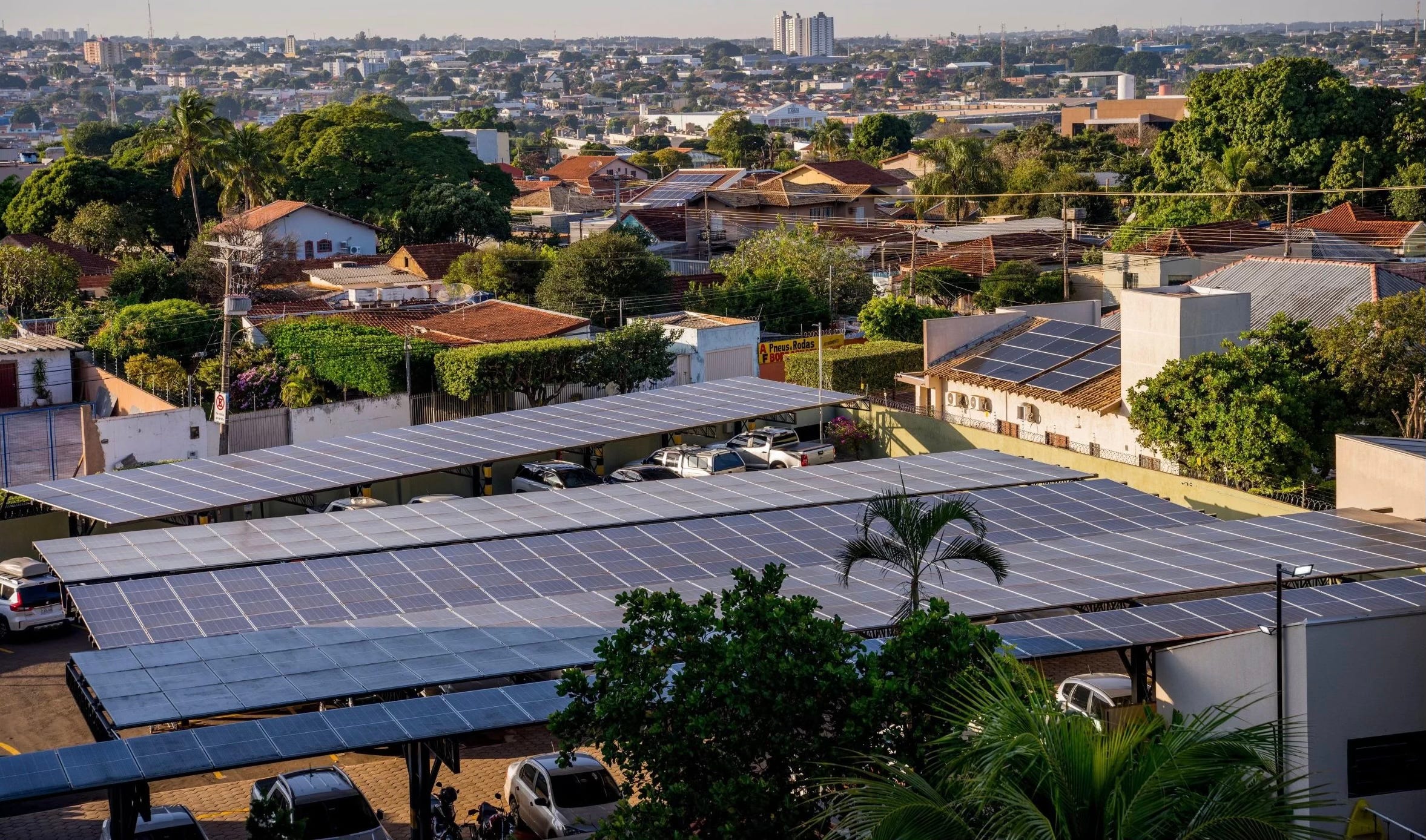
Here in Maine, we’re accustomed to sending most of our electrical generation and distribution profits out of state. In fact, much of it goes out of the country! By and large, utilities are monopolies, a status granted by the states to insure that the usual free enterprise system proclivities don’t result in multiple sets of poles and wires crisscrossing the landscape. Knowing what monopolies prefer to do, states set up Public Utility Commissions to protect the public’s interests — some of them actually work!
By the traditional grid model, electricity was generated at large facilities, often hundreds of miles from the ultimate consumer. Coal, oil & gas fired steam generators, hydroelectric facilities, and nuclear power plants sent lots of power through high tension transmission lines to the state utilities, which took care of sending smaller chunks through their distribution lines to customers. These days we know that we can make cheaper, less polluting, more reliable power, almost anywhere, from the sun and wind.
Managers of transmission and distribution systems must size their infrastructure — towers, poles, wires and substations — according to the maximum load they are expected to handle. Those big loads only occur during three or four hours of a dozen or so days each year, usually when a hot summer afternoon sends millions of folks rushing to their air conditioners. The rest of the time, those wires only carry a small fraction of their peak load capacity.
As we attempt to save ourselves from the existential threat of climate change by “electrifying everything”, we’re faced with two options. We could invest titanic sums in the old grid model (don’t fool yourself into thinking that anyone but the consumer will be paying for this). Or, we could spend much less on new technologies that can take advantage of small, widely distributed energy sources, and manage loads in ways that make better use of the poles and wires that we already have. Dive deeper here.
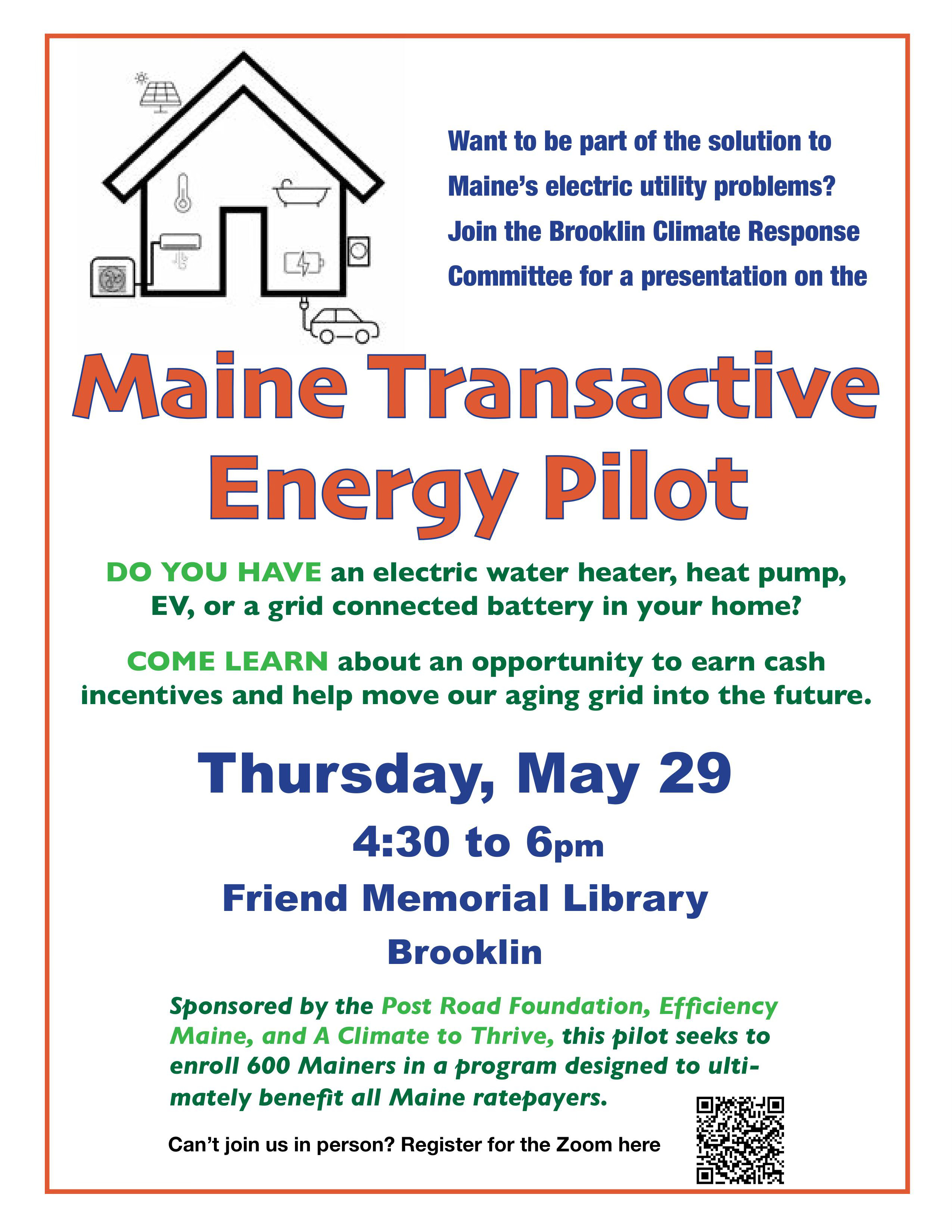
I’ve been reading about such technologies for years now. They offer hope for a more democratic electrical grid, one less dependent on big corporations and less vulnerable to extreme weather, one that lets us help our neighbors by lowering electrical costs for everyone. One where you can get paid for being willing to help out a system that should be a public asset. Sound too good to be true? Read more by Post Road Foundation. Or watch this short video. Or join us in Brooklin on May 29.
BE OUTRAGED!!
“The Energy Star program and all the other climate work, outside of what’s required by statute, is being de-prioritized and eliminated,” crowed Paul Gunning, the new director of the E.P.A. Office of Atmospheric Protection. The Energy Star Program, started under the administration of George H. W. Bush, has proven to be one of the most successful voluntary initiatives ever introduced by the U.S. government. It has saved 5 trillion kilowatt-hours of electricity, more than $500 billion in energy costs, and prevented 4 billion metric tons of greenhouse gas emissions. Who could be against these kinds of savings?? Hint — they donated heaps of money to the re-election campaign of our current president.
AND A LITTLE DOSE OF OPTIMISM!
Latin America and the Caribbean have made huge strides in expanding distributed energy resources like solar and wind. Driven mostly by Brazil, Mexico, Puerto Rico, the Dominican Republic, Chile and Colombia, the region went from just one gigawatt of installed distributed capacity in 2017 to 31.8 GW in five years! The trend continues and is fostered by low prices for solar panels built in China. And contrary to what we hear from the disinformation system, China’s mastery of renewable energy manufacturing is not the result of forced labor and government subsidies, but instead due to sophisticated automation, forward looking industrial policy and intense competition. Maybe we could do these things? Sustainability by Numbers
JUST SAYIN’
About 29.7 million acres of farmland are dedicated to corn growing for ethanol fuel in the U.S. About 38% of the U.S. corn harvest is used for ethanol fuel, rather than food. The same amount of energy could be generated on 3% of that land with solar panels. The land under most cornfields is dosed with petroleum based fertilizers and pesticides. The land under solar farms can allow topsoil regeneration and help sequester carbon.

“If you grow an acre of corn, it will produce 900 gallons of ethanol, which will get you about 25,000 miles for a Ford F-150 pickup. Which is, not bad I guess. But let’s say we put solar on that same acre. It will produce enough electricity every year to drive a Ford Lightning EV pickup 550,000 miles.” Bill McKibben from The Crucial Years..